THE CARD
A thought for the day.
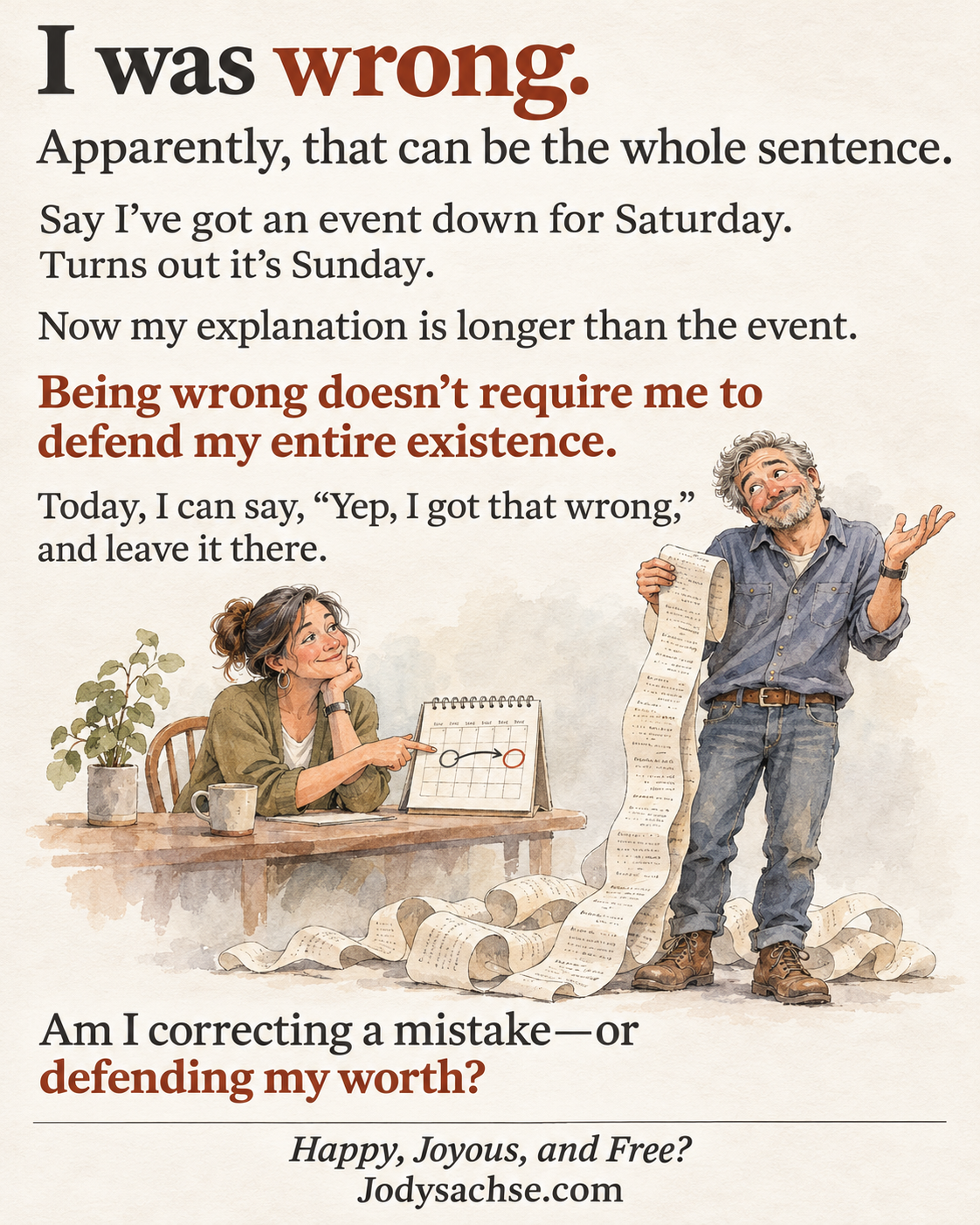
I was wrong. Apparently, that can be the whole sentence.
Say I’ve got an event down for Saturday. Turns out it’s Sunday.
Now my explanation is longer than the event.
Being wrong doesn’t require me to defend my entire existence.
Today, I can say, “Yep, I got that wrong,” and leave it there.
Am I correcting a mistake—or defending my worth?
THE LESSON BEHIND THE LESSON
A mistake isn’t a verdict on me.
Sometimes I get something as simple as a date wrong, and my mouth immediately starts building a defense case. Before I know it, the explanation is longer than the event.
Underneath the urge to explain can be a bigger worry: If I got this wrong, what does that say about me? Today, I’m practicing letting a mistake be a mistake. It can tell me what needs correcting without deciding my worth.
Accountability still matters. I can correct the date, apologize or make something right when I need to, and offer an explanation if it actually helps. I don’t have to keep talking until everybody agrees I’m a good person.
Being willing to be wrong gives me room to learn. “Yep, I got that wrong” might be plenty for today—and then I can get on with the next right thing.
Where could I correct a mistake without putting my worth on trial?